
analogerer Plugins
Located in the Black Forest in Germany, SonicWorld has been known for servicing analog Recording Studioequipment for over 25 Years.
Now we put our knowledge in creating outstanding plugins
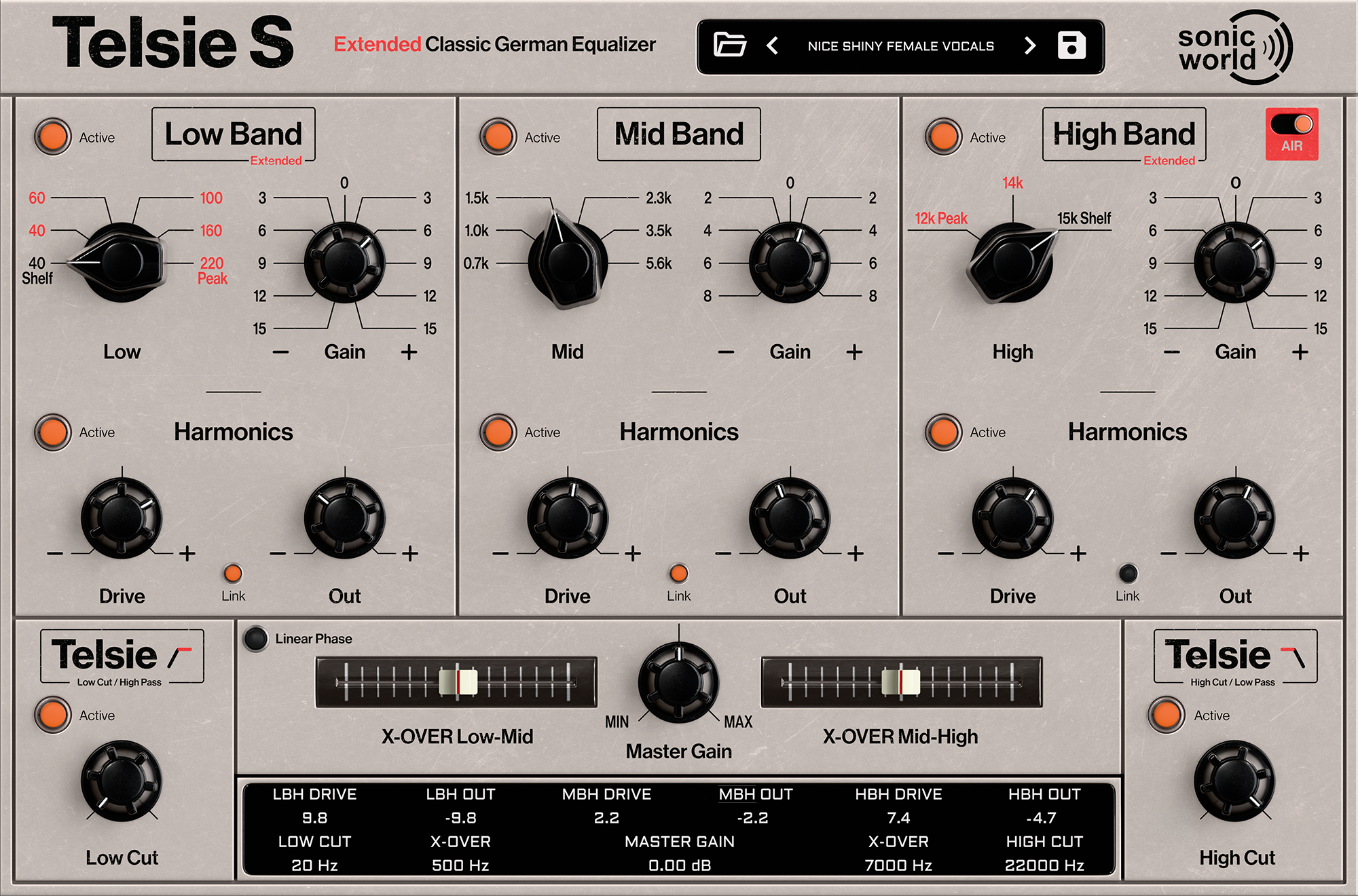
Scalable up to 2000x1320 pixels
Bundle Offer: Get Telsie S and Telsie T for only 119,-- EUR / 129 USD
--
Bundle Offer: Get Telsie S and Telsie T for only 119,-- EUR / 129 USD --
10 days free trial
Activate up to 2 machines
AU, VST3, AAX Native and AudioSuite
Some user and press reviews:
Telsie S has quickly become our favorite EQ. It’s super easy and intuitive to control.
The top-end sounds better than anything we have heard from other EQs.
It truly makes anything shine.
We have used the Tells S on drums, vocals, acoustic and electric guitars and
on the masters bus - it kills on all of it.
This EQ is an exquisite sound-designing tool. We wouldn't want to work
without it anymore.
Thomm Jutz
Producer, songwriter
TJTunes, Nashville/TN

This is what really sets the Telsie S apart: the excellent basic sound of the original combined with new, additional possibilities. This is what I miss in plug-ins from other manufacturers that simulate the W295b but leave it at a pure simulation and thus also inherit all the weaknesses of the original. The Telsie S takes a different approach here. (…)
On one hand, the W295b filter has been simulated very well, but the new options that go beyond the W295b functionality enrich the plug-in enormously. For anyone who wants to make optimizations in the bus, in the master, or even in the mastering process itself, the Telsie S is exactly the right choice.
Peter Kaminski
Proaudio
You can read the full reviews here:
(…) even in its default state—using only the high-pass and low-pass filters—it immediately imparted a beautiful color to the sound. It felt like the missing piece of the puzzle.
Next, I emphasized the midrange at 1.5 kHz, a frequency range that quickly reveals whether an EQ is truly smooth.
I then used the harmonic drive linked to the per-band outputs to fill in some gaps in the track and give the song a nice, finished glow.
Finally, the track needed some refined high end, and once again I got there very quickly by using the Air function on the last band of the Telsie S, while setting the mid–high crossover to 20 kHz.
Wow—smooth as silk highs.
The Telsie S sounds absolutely gorgeous, I think I’ve found a new best friend.
Do yourself a favor and try the Telsie S for yourself—I simply love it.
Farzad Rahnavard
Mastering Engineer
Duo Mastering, Hamburg
5 of 5 Stars Review on www.bonedo.de
Ultimately, the Telsie S isn't a nostalgic museum piece, but a highly practical tool: distinctive, elegant, and versatile – whether for mixing, vocals, drums, or synths. It delivers a credible, contemporary interpretation of the German broadcast sound, providing exactly what's needed in everyday use! 5 stars.
Felix Klostermann
www.bonedo.de
Der Telsie S ist ein Ausnahme-Equalizer, der in der Lage ist, voluminöse Bässe und offene Höhen zu jedem akustischen Instrument hinzuzufügen und zur selben Zeit das ursprüngliche Timbre bewahrt.
The Telsie S is an exceptional equalizer capable of adding voluminous bass and open treble to any acoustic instrument while preserving the original timbre.
Christian Jaeger, Tonmeister für Klassik- und Jazzproduktionen, Nürnberg
Christian Jaeger, Tonmeister for classical and jazz productions, Nuremberg
Classic German Broadcast EQ — Reimagined
The SonicWorld Telsie S is a three-band equalizer plug-in inspired by the legendary Siemens W295b — a discrete Class A design from the 1970s, celebrated for its open, airy top end and powerful low-frequency response.
Originally developed for the ARD (Association of German Public Broadcasters), Siemens broadcast consoles represented the pinnacle of German audio engineering of their era. Following the iconic V72 and V76 tube designs, Siemens introduced a new generation of precision solid-state modules, including the renowned V276 microphone preamp and the highly respected W295 equalizer series.
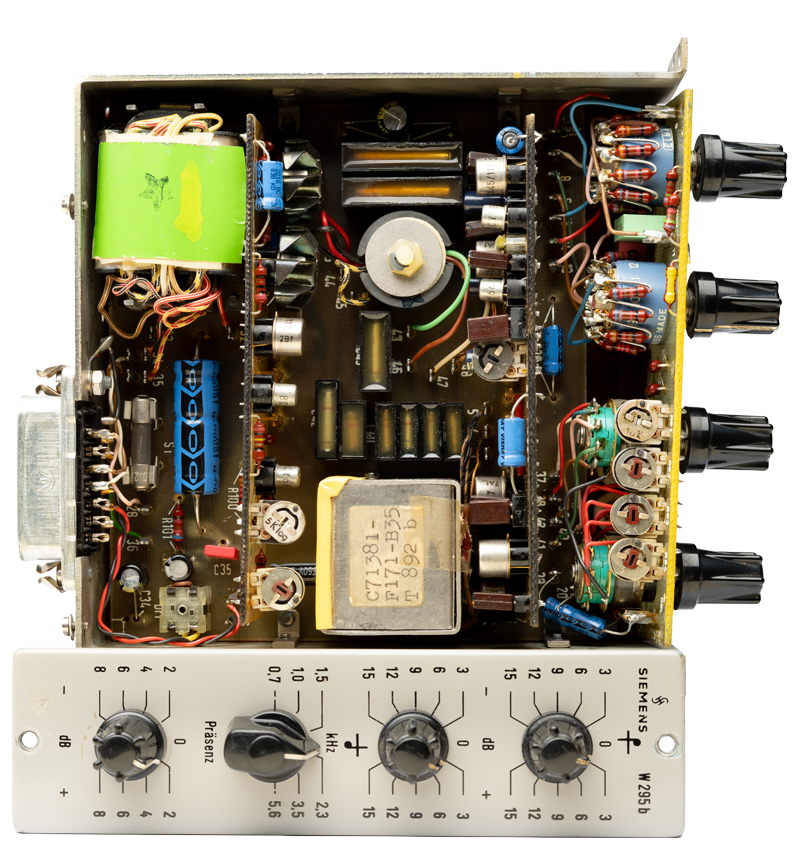
Among the W295, W295a, and W295b revisions, the W295b became the most sought-after version thanks to its additional mid-band presence/absence filter and uniquely musical sound character. Its smooth high frequencies, broad tonal curves, and effortless musicality continue to make it a favorite among engineers, producers, and mastering studios today.
Built on more than two decades of hands-on experience servicing and integrating original Siemens hardware, Telsie S faithfully captures the sonic essence of the W295b while expanding its capabilities for modern production workflows.
No noise. No maintenance.
Just the unmistakable sound of a classic German broadcast equalizer — redesigned for today’s studio environment.
Inspired by the Original W295:
Low & High Shelf Filters
The low and high bands operate as smooth, wide musical shelf filters with up to ±15 dB gain.
Low Shelf: 40 Hz
High Shelf: 15 kHz
The low band delivers weight, warmth, and depth, while the high band adds clarity and air without sounding harsh or brittle.
Mid-Band Presence Filter
At the center of Telsie S is the iconic presence/absence mid band.
Selectable frequencies:
700 Hz
1 kHz
1.5 kHz
2.3 kHz
3.5 kHz
5.6 kHz
with up to ±8 dB boost/cut.
The mid-band uses a proportional Q design, where bandwidth naturally narrows with increasing gain, allowing for focused yet highly musical tonal shaping.

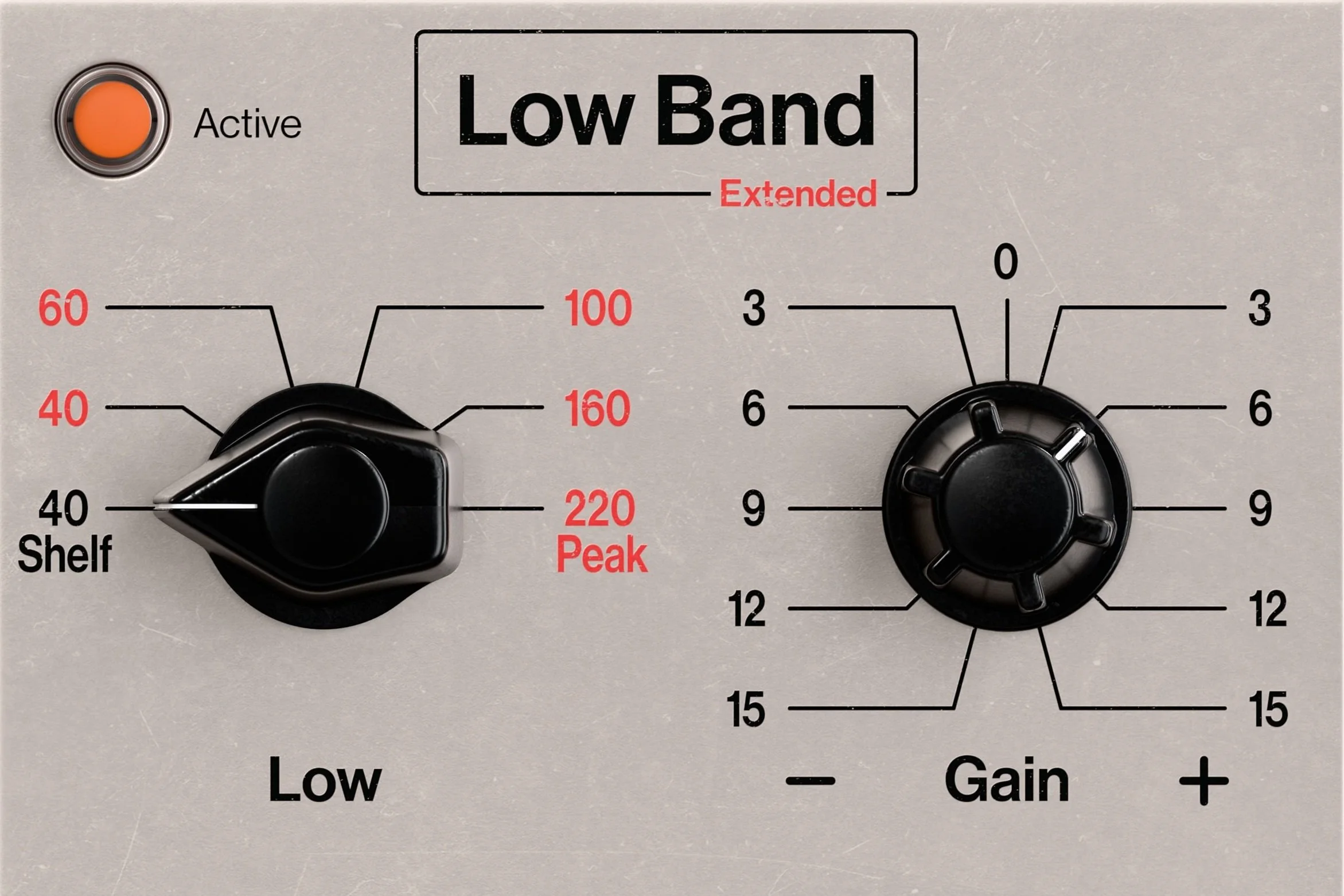
Extended Low-Frequency Control
While remaining faithful to the original design, Telsie S significantly expands the low-frequency section for modern mixing and mastering applications.
In addition to the classic 40 Hz shelf, the plug-in includes selectable peak filters at:
40 Hz
60 Hz
100 Hz
160 Hz
220 Hz
These bell filters feature proportional Q behavior, becoming tighter and more focused with stronger boost or cut settings.
The result is a versatile low-end section capable of everything from subtle warmth and analog weight to precise low-mid sculpting.
Extended High-Frequency Control & AIR Enhancement:
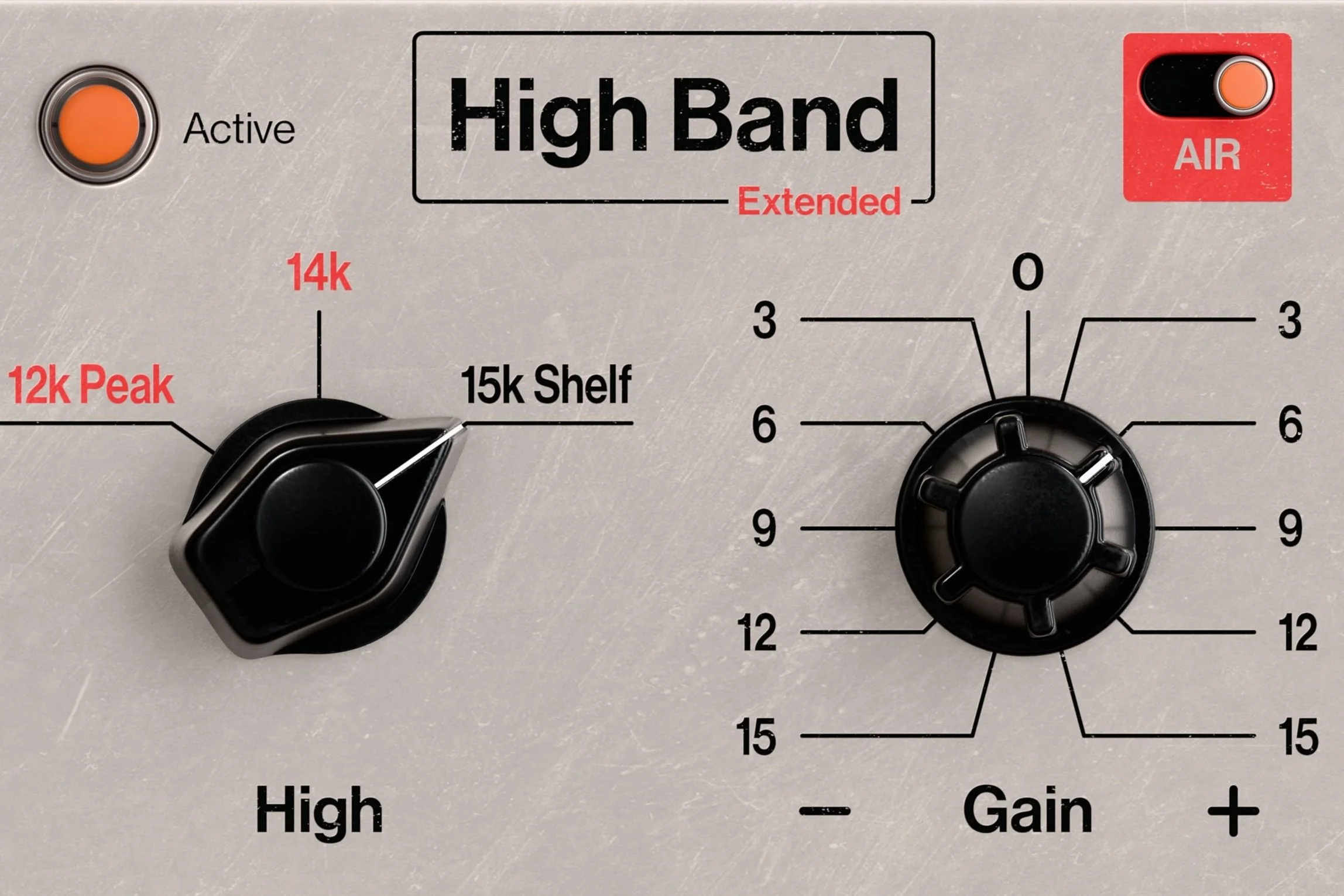
The original 15 kHz shelf remains at the heart of the high-frequency section, delivering the smooth openness and airy detail the W295b is famous for.
For additional flexibility, Telsie S introduces:
12 kHz peak mode
14 kHz peak mode
with up to ±15 dB gain in precise 3 dB increments.
AIR Mode
The integrated AIR switch extends the high-frequency response even further, enhancing openness, spatial depth, and ultra-high frequency detail.
Its effect becomes even more pronounced at higher sample rates, adding an additional sense of dimension and transparency to the signal.
Harmonics Section:
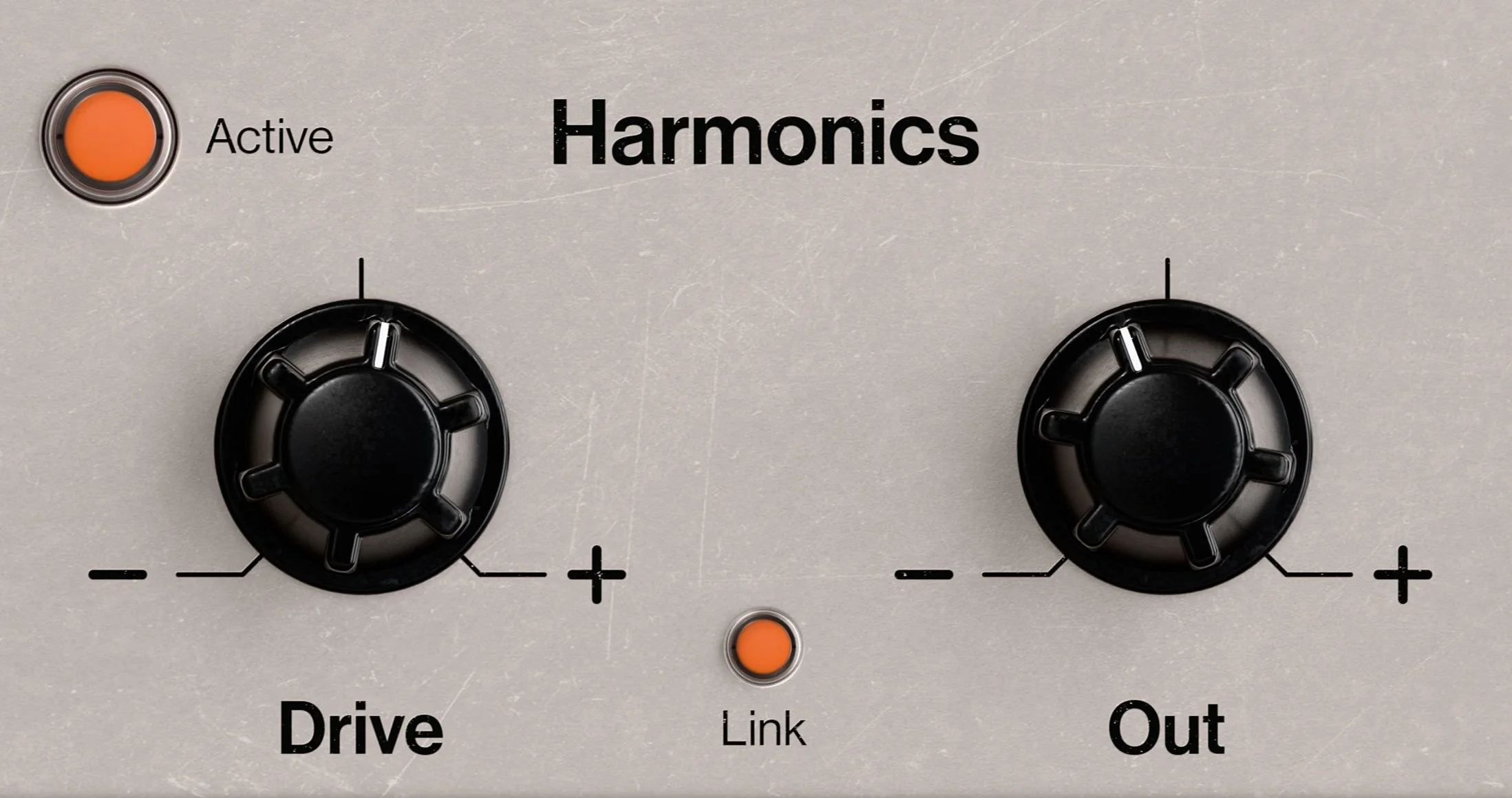
Each EQ band includes its own dedicated harmonic saturation stage for adding analog-style richness and color.
Controls
Drive — Adds harmonic saturation and density
Out — Compensates output level
Link — Couples Drive and Output controls
From subtle analog warmth to aggressive coloration, the Harmonics section transforms Telsie S into a complete tone-shaping tool while preserving clarity and musical balance.
Musical High Pass & Low Pass Filters:
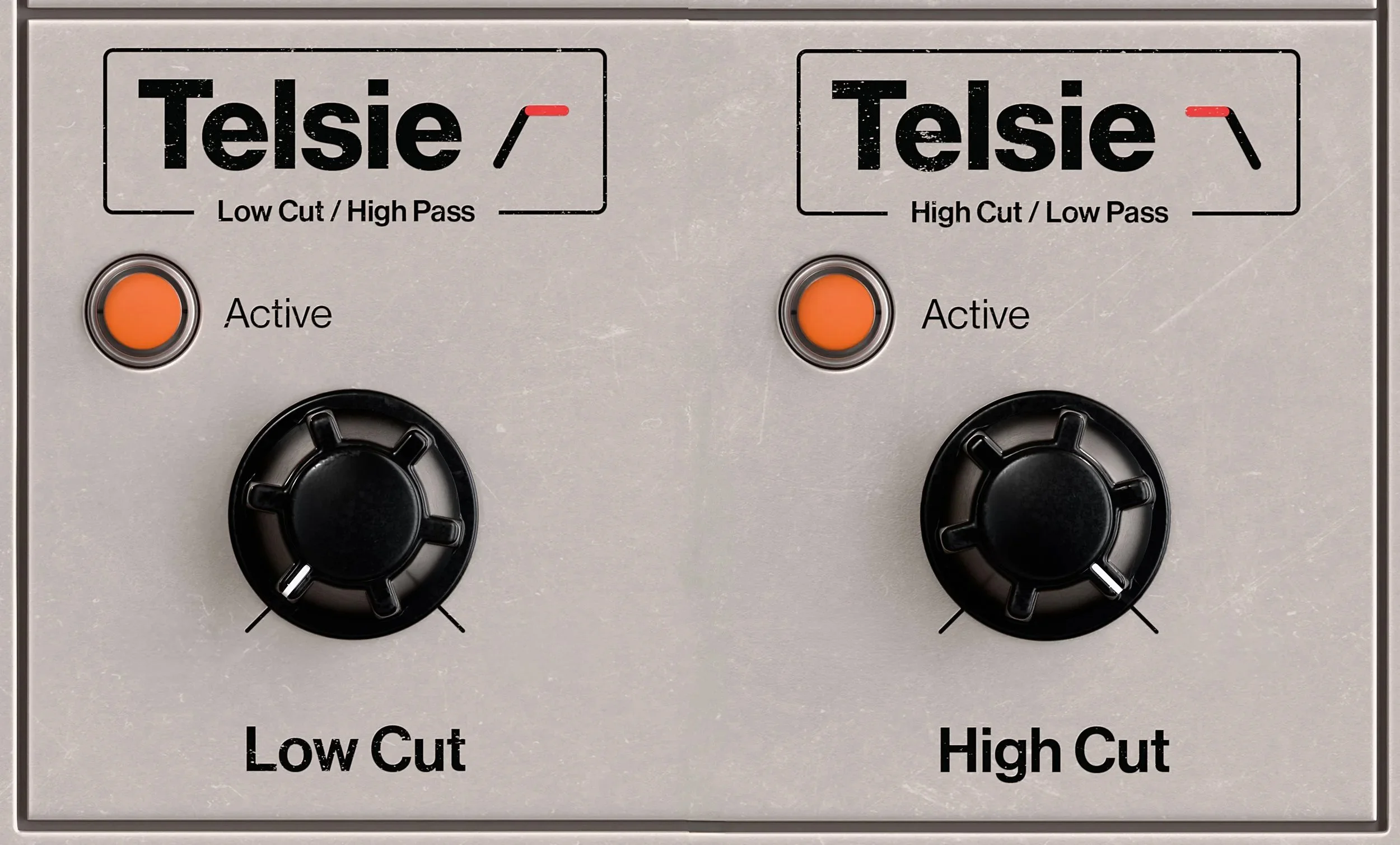
Telsie S includes integrated Low Cut (High Pass) and High Cut (Low Pass) filters for precise cleanup and tonal control.
Features:
Freely adjustable cutoff frequencies
Gentle musical 12 dB/octave slope
Smooth analog-inspired filter response
Ideal for:
removing low-end rumble
taming harsh high frequencies
tightening mixes
shaping depth and space
Intelligent X-Over System:
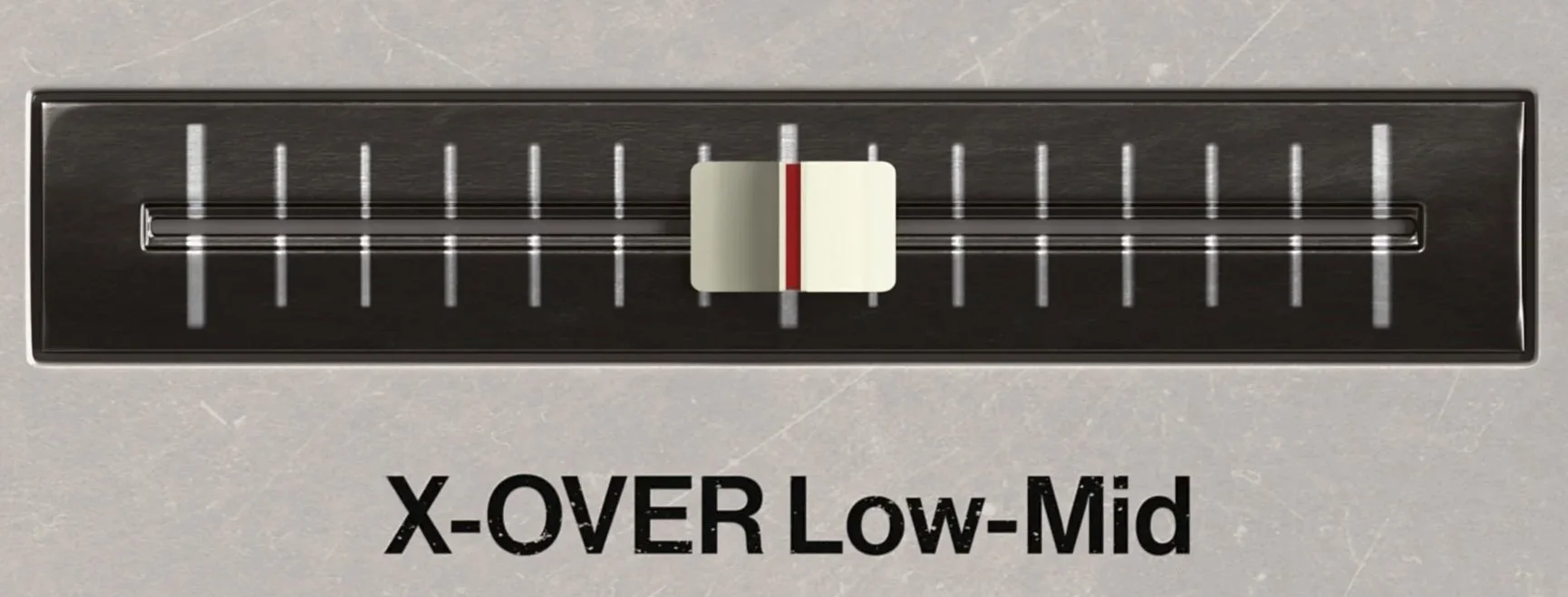
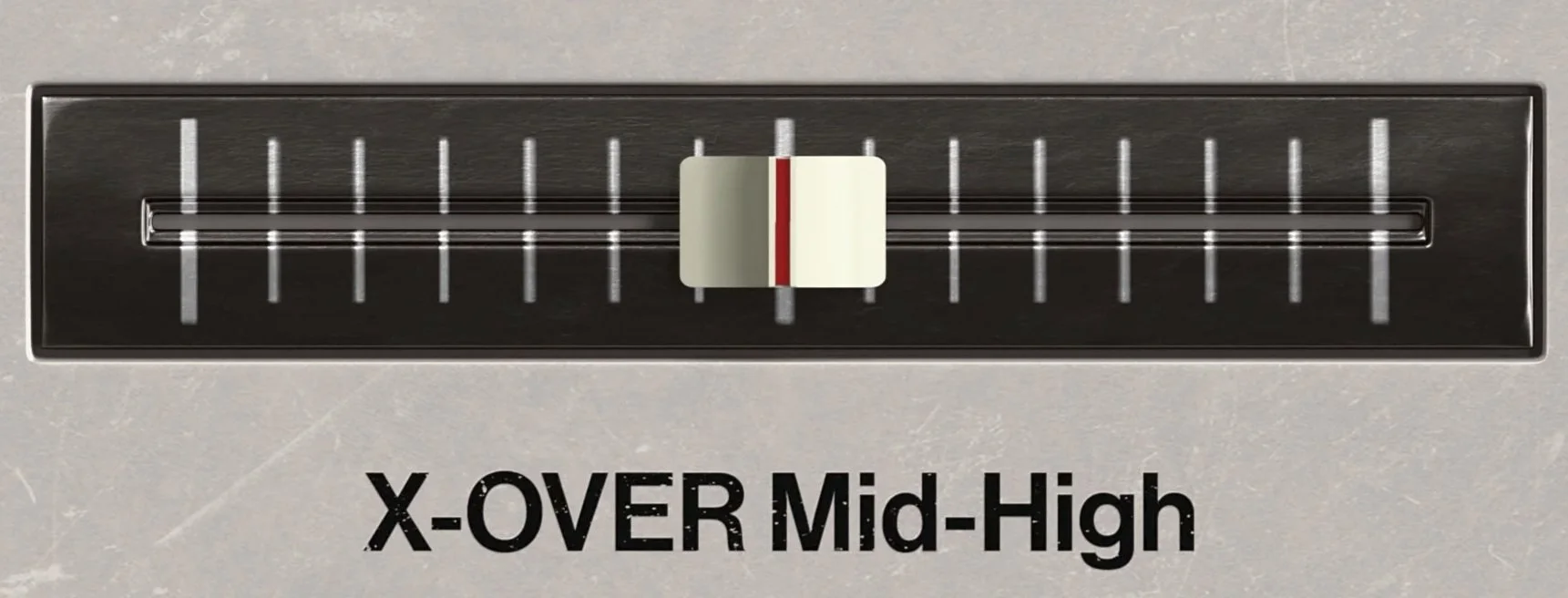
One of the most powerful enhancements in Telsie S is its adjustable crossover system.
The original W295b is known for its extremely broad EQ curves. While this contributes to its musical character, it can also cause unwanted interaction across large frequency ranges.
Telsie S solves this with adjustable crossover points between:
Low ↔ Mid
Mid ↔ High
Default settings:
500 Hz
7 kHz
This allows you to precisely control how the EQ bands interact, enabling:
tighter low-end shaping
cleaner vocal presence
more focused high boosts
reduced frequency overlap
For example:
lower the Low/Mid crossover for tighter bass control
raise the Mid/High crossover to boost air frequencies without affecting the upper mids
The result is the musicality of vintage analog EQ with significantly improved precision and flexibility.
Linear Phase Mode
Telsie S uses a carefully tuned nonlinear crossover topology designed for maximum musicality and analog behavior.
However, in complex multitrack recordings — especially drums or multi-microphone sessions — nonlinear phase interaction can sometimes become noticeable.
For these situations, Telsie S includes an optional Linear Phase mode.
When enabled:
crossover response becomes more phase-linear
stereo imaging becomes more precise
phase coherence improves across multi-mic recordings
To preserve phase integrity:
Low Cut and High Cut filters are automatically bypassed in Linear Phase mode
This mode is ideal for mastering, drum buses, orchestral recordings, and any application requiring maximum transparency and phase accuracy.
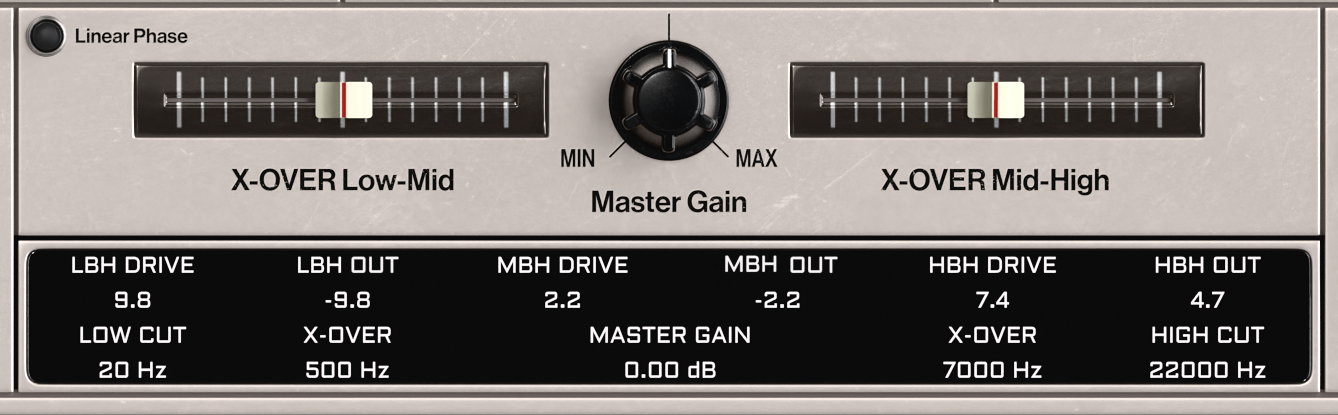
The Master Gain control compensates for level changes introduced by EQ or harmonic processing and enables precise output matching for accurate A/B comparisons.
Clicking the control instantly resets it to 0 dB.
Parameter Bar
The integrated Parameter Bar provides an overview of:
harmonic settings for all bands
Low Cut and High Cut filter values
crossover frequencies
Master Gain level
This ensures fast workflow, full transparency, and precise control at all times.
Master Gain & Parameter OvervieW:
Supported Formats:
Windows: Windows 11 • 64-bit • VST3, AAX Native and AudioSuite
MacOS • macOS 10.15 or later (64-bit only) • AU, VST3, AAX Native and AudioSuite
Apple Silicon or Intel processor